All policy-makers are aware of the fact that when we make laws, it is important to consider the unexpected consequences that the legislation may have. These consequences may not only manifest in the present time, but could also pave the way for other unwanted regulation in the future or inspire legal actions in other countries.
When, for instance, many countries now seek to find ways to prevent the spread of disinformation and hate speech online, we see a clear need for regulation. The shocking events in Washington D.C. on January 6th has thrown this need into the spotlight, after the president of the United States incited violence against the US Congress. However, such legislation is difficult to formulate, and examples of unintended consequences of such laws have already surfaced.
One such example is the German law called NetzDG, or Facebook Act, which was passed in 2017 and among other things requires social media companies to delete obviously illegal content within 24 hours. Critics have raised that such a law in practice delegates to companies to determine which content is illegal. In the drafting process, the law was criticised by both Reporters Without Borders and David Kaye, the UN Special Rapporteur on Freedom of Opinion and Expression, for endangering freedom of expression and human rights.
As Liberal International points out in our newly launched campaign, in cooperation with Radikale Venstre, this German law has been the inspiration of similar laws in many other countries. In Turkey, social media companies are since 2020 required to take down content that violates “personal rights” and the “privacy of personal life”, after a series of tweets insulted relatives of President Erdogan. The law has also been copied in countries such as Russia, the Philippines, Venezuela, and India. These regimes use such laws to silence critics and shrink the democratic space.
In a policy lab organised by Liberal International in July 2020, MEP Karen Melchior stressed the importance of creating legislation robust enough for the worst offenders, rather than assuming benevolence from governments and other actors. This especially important for pioneering legislation, where many countries will copy a first-mover. While an inadequate law may not cause much damage in Germany, with a strong judicial system and healthy democratic norms, the same may not be said for countries such as the Philippines or Russia.
In the launch of our joint LI and Radikale Venstre campaign on digitalisation and human rights on 22 January, European Commissioner Margrethe Vestager received a question regarding the difficulty of defining illegal content. In the newly proposed Digital Services Act, moderation of illegal content is included. However, what is illegal is decided by individual countries. Commissioner Vestager stressed that many of her colleagues in the European Commission grew up behind the Iron Curtain and have seen the worst of what may happen when the state defines what is true.
As we have seen how rapidly democratic norms may be dismantled in EU countries such as Hungary and Poland, it is essential for liberals to consider the implications a piece of legislation may have also in authoritarian countries and ensure as far as possible that it is robust enough to withstand both benevolent and malevolent rulers.
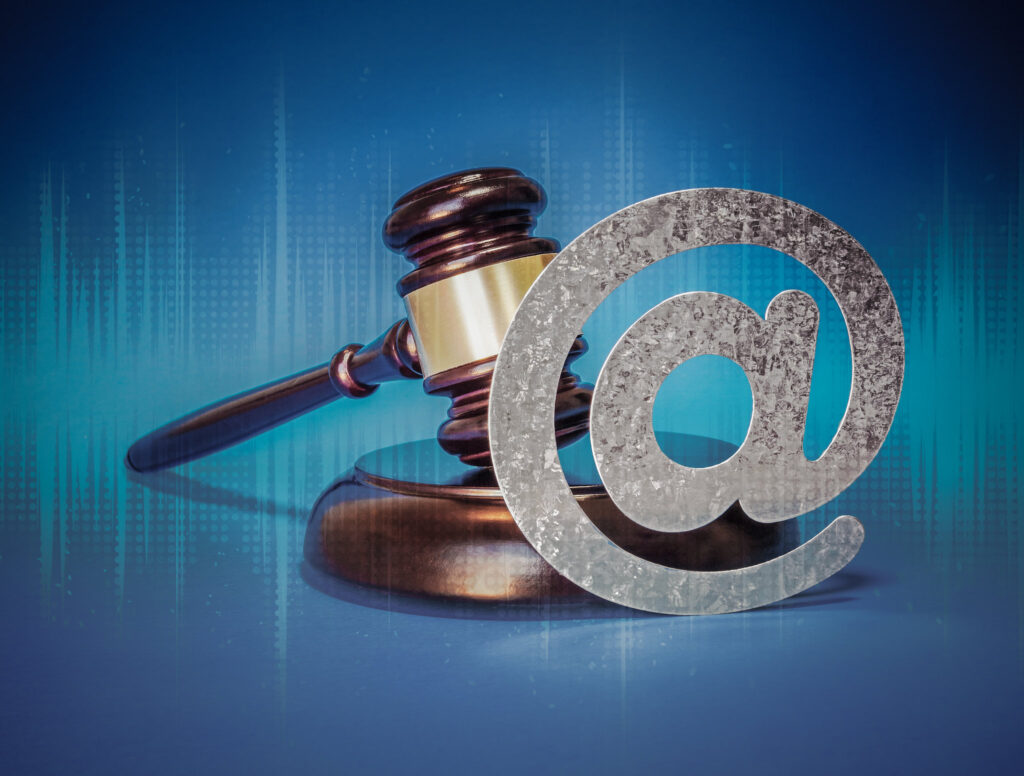
Main image: Blogtrepreneur on Flickr