Liberal Principles of Digitalisation and Human Rights

In April 2020, the LI Human Rights Committee established the Working group on Digitalisation and Human Rights. The main focus of the working group is the development of the Liberal Principles of Digitalisation and Human Rights.

In 2018 Liberal International conducted a short survey on its member parties.  The results from the survey showed that of those who responded only 1 in 3 LI member parties have a clear policy on digitalisation. Hence, there is certainly a need for liberal guidelines on the topic of digitalisation. Liberal Principles of Digitalisation and Human Rights is a guiding document for liberals regarding digitalisation and human rights.

The Liberal Principles of Digitalisation and Human Rights

We liberals,

Recognizing that the irreversible proliferation of digital technologies provides new avenues to exercise human rights and ingenuity for the betterment of society, including in denouncing electoral fraud,

Also recognizing that the same technologies are too often used to violate human rights and restrict freedoms to an unprecedented degree,

Recalling the Universal Declaration of Human Rights, European Commission Declaration on Digital Rights and Principles, and Manila Principles on Intermediary Liability,

Adopt these principles to guide liberal member parties in their policies and practices towards securing the protection of human rights and freedoms in the digital age.


  1. Any human rights respected in the physical world must be equally respected in digital form.
  2. Any legislation and technical tools put in place affecting human rights must be proportional and robust enough to be acceptable under any government, benevolent or not.
  3. Access to information and communications technology and the right to information should be inclusive, where no part of the world or group in society is left behind.
  4. Openly and persistently denounce and work against the use of internet shutdowns as a hindrance for enjoyment of human rights such as access to information, freedom of expression, health, education, and work.
  5. Strengthen policies and work towards the development of a common framework to combat cybercrime and breaches of privacy and personal data security, ensuring transparency and due process when fighting cybercrime.
  6. Resist the introduction of any kind of legislation on or undermining storage encryption, which risks infringing on the rights to privacy and data protection.
  7. Oppose mass surveillance and develop alternative instruments, policies, and approaches to prevent and combat crime without degrading the privacy and software security of the entire society and every human being.
  8. The transparency, accountability, and comprehensibility of tech companies and governments for their use of data and data retention must be increased, also ensuring that individuals know when their data is being collected and what it will be used for.
  9. Transparency, accountability, and comprehensibility in the use of artificial intelligence and emerging and disruptive technologies must be ensured, to clarify chains of responsibility and ensure traceability in decision-making, and to allow societal oversight of the algorithms that have a significant impact on the lives of citizens.
  10. Legislation on content moderation, aimed at managing hate speech, disinformation, or other malicious content online, must not arbitrarily restrict the freedom of speech or encourage private companies to pre-emptively censor content.

Read and download the Liberal Principles of Digitalisation and Human Rights booklet

Campaign Outline

The outbreak of the coronavirus in early 2020 has forced us to rethink our physical presence and explore digital tools. Advanced technology has given us the possibility to meet online, to organise and attend events from our homes, and to track the spread of the virus through digital apps.

However, when the agenda behind using digital tools becomes anything other than simplifying human lives and assuring social human rights, we face a problem. Both before and during the coronavirus crisis, digital platforms have been used by governments to spread misinformation and control their populations. Digital development should be a positive force for human rights progress. When constructing and regulating digital platforms and tools, we should be able to ensure that human rights are enjoyed regardless of one’s geographical or economic position.

This campaign, jointly run between Liberal International and Radikale Venstre, aims to raise awareness of the human rights issues associated with societies and individuals increasingly conducting themselves in the online sphere, and some of the key issues that liberal politicians across the world need to be aware of.

Campaign Videos


____________________________________

Related Articles

Latest News

Reclaim the Narrative: LI training at ILFRY General Assembly
22/03/2023
Reclaim the Narrative: Media preparedness and strategic communications, a 90-minute fringe training session in partnership with D66 under the auspices of the IFLRY General Assembly, brought together young political liberals for a training on strategic communications, media preparedness, and personal branding to neutralize disinformation and embed long-term resilience against disinformation campaigns and attacks.
Second round of Expert Consultations on Principles of Digitalisation and Human Rights
21/02/2022
Liberal International’s Human Rights Committee convened its second round of expert consultations on its newly developed Liberal Principles of Digitalisation and Human Rights. 
Digitalisation
Liberal democracies must lead the defense of free speech in digital spaces: Jacob Mchangama speaks at the 204th Executive Committee Meeting of Liberal International
12/10/2021
The Liberal International Human Rights Committee (LI HRC) was proud to welcome Jacob Mchangama, an expert on freedom of expression, to deliver a keynote presentation on free speech in the digital space and the challenges of its regulation and governance.
Digitalisation
We must fight for democracy every day, LI urges on the International Day of Democracy
15/09/2021
On this occasion of the International Day of Democracy, Liberal International remains observant and engaged with the global decline in democratic freedoms around the world.
International Day of Democracy
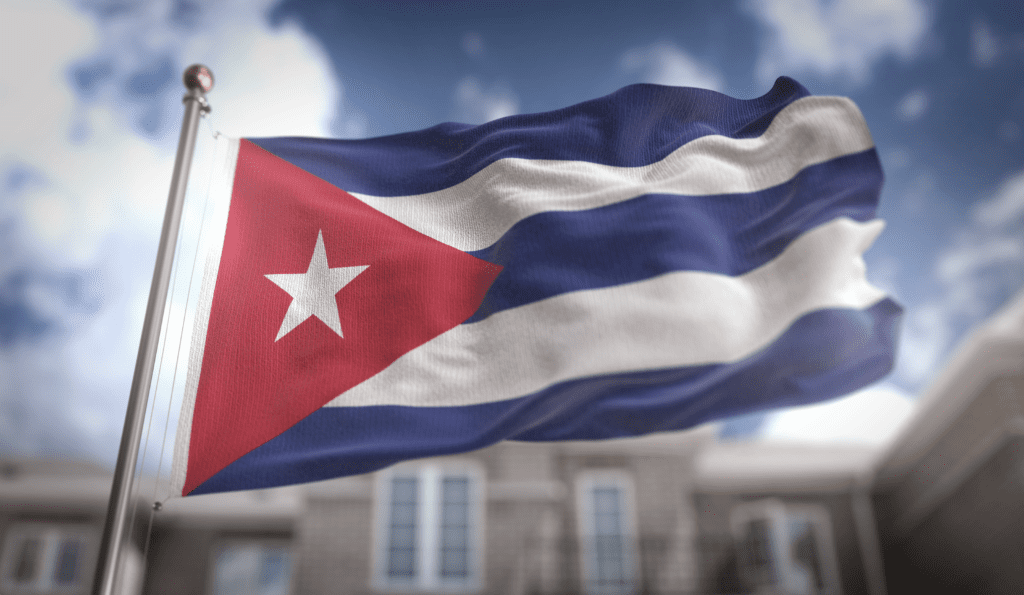
Liberal International’s Human Rights committee condemns the new internet laws and related repression in Cuba
02/09/2021
Liberal International's human rights committee condemns the recent restrictions imposed by the Cuban regime on internet use and social media, further curtailing the freedom of expression of the Cuban population.
Cuba
Legislation on digital rights must be robust enough for the worst offenders
28/01/2021
As we have seen how rapidly democratic norms may be dismantled in EU countries such as Hungary and Poland, it is essential for liberals to consider the implications a piece of legislation may have also in authoritarian countries and ensure as far as possible that it is robust enough to withstand both benevolent and malevolent rulers.
Digitalisation
Campaign launch calls for urgency in securing human rights online
22/01/2021
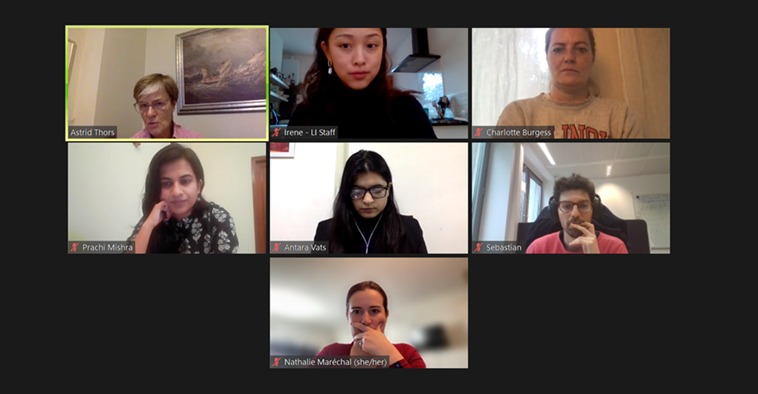
Bringing together Margrethe Vestager, Executive Vice President of the European Commission for A Europe Fit for the Digital Age, and Maria Ressa, journalist and CEO of news organisation Rappler in the Philippines, in a conversation moderated by LI HRC Chair Astrid Thors, this event explored the importance and urgency of securing human rights online.
Digitalisation
LI and Radikale Venstre launch joint campaign to strengthen human rights online
19/01/2021
In December 2019, Liberal International conducted a survey among our member parties, asking whether they had developed policy on digitalisation and human rights. To our surprise, only 1 in 3 parties responded that they had. This realisation laid the foundation for the campaign that Liberal International, with the generous support of Radikale Venstre, is launching this week.
Digitalisation
The digital divide solidifies inequality and undermines equality of opportunity
14/12/2020
The coronavirus pandemic has served as a stark reminder of the importance of internet access for participation in society. Lockdowns and other severe restrictions on movement have forced a large part of the world’s population to move both professional and social interactions online. With an increasingly large portion of our lives being conducted virtually, internet access has become a crucial tool for individuals to take advantage of their opportunities in society.
Digitalisation
More Posts