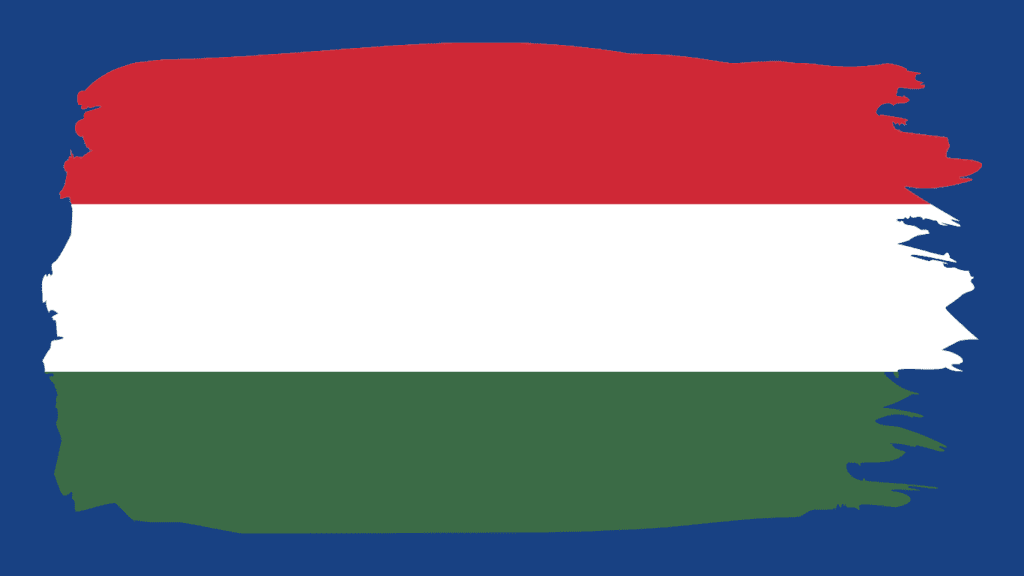
Viktor Orbán, a declared enemy of liberalism, has been voted out of power after 16 years. Hungarians have said: enough is enough. They are right.
By Prof. Dr. Karl-Heinz Paqué, President Liberal International
Election night in Budapest was memorable. The united opposition, Tisza, led by Péter Magyar, won 52.9 percent of the vote, while the party Fidesz of incumbent Prime Minister Viktor Orbán secured just 38.7 percent. The future distribution of seats in the Hungarian parliament: a two-thirds majority for Tisza.
A sensation—at least in terms of the size of the margin. Tisza owed its landslide victory to its charismatic and clever lead candidate Péter Magyar, but even more to widespread dissatisfaction with the government: due to massive corruption and cronyism, the autocratic penetration of the judiciary and media, associations, businesses, and universities, constant (and costly!) disputes with the European Union, extremely weak economic growth, embarrassingly eager deference to Putin’s Russia, and—because of all this—an exceptionally high voter turnout.
One could say: civil society rose up against a rough right-wing populism. People had had enough of Viktor Orbán’s “illiberalism,” which he elevated to a political doctrine more than ten years ago. Not that they elected a “true” liberal—the opposition candidate Péter Magyar is a defector from the Fidesz camp—but they nevertheless chose a more moderate conservative who promises a more open Hungary.
All of this is remarkable because, in recent years, many observers of Hungary had effectively given up on the country’s engaged civil society. Orbán had silenced opposition movements and placed loyal Fidesz figures in control of all key positions—very much in the style of an authoritarian system. Yet this civil society clearly still existed beneath the surface and, at the decisive moment, was strong enough to transform the political landscape. This shows one thing: extreme caution is needed when diagnosing the stability of authoritarian structures. This should have been obvious to many astute Western observers: Hungary saw an uprising against communism in Hungarian Revolution of 1956, and in 1989 the opening of the Iron Curtain at the Austrian–Hungarian border and the transition to democracy—led in part by the then-liberal Viktor Orbán.
Much now remains uncertain. Magyar faces enormous challenges, as the dense web of institutional structures—dominated by Orbán’s Fidesz loyalists—is difficult to penetrate. This is similar to the situation in Poland, where the liberal-conservative Donald Tusk must constantly navigate structures put in place by the former nationalist PiS government. Still, the change has come, and Orbán acknowledged his defeat on election night. A beginning has been made. Respect!
Internationally, Hungary’s lesson carries an important message: it is possible. There is no inevitable trend toward right-wing populism. Recent elections in Canada and the Netherlands have already shown this. Hungary may now be the most important building block for regaining confidence in freedom and democracy. Especially since Vladimir Putin was actively pulling strings behind the scenes in support of Orbán—one of his key allies in the West—and since explicitly anti-European backing for Orbán from Donald Trump and U.S. Vice President J. D. Vance continued right up to the final days before the election. Evidently, this did not help—perhaps it even harmed Orbán. Proud Hungarians have said: we decide for ourselves.
Without a doubt, an encouraging sign. For other countries as well, where people are passionately fighting for the vitality of their democracy. Not much more than that—but still, something.