Peace processes need to meaningfully integrate women. Time and time again, conflict situations reveal an alarming deficit in protections for women and girls in conflict zones and resources for the rehabilitation of their lives.
Despite being disproportionately harmed in conflicts, women are still struggling for inclusion in the negotiations to resolve them. From the dark developments in Ukraine and the exclusion of women from society by the Taliban to conflicts in Ethiopia, Mali, Guinea, Burkina Faso, Yemen – there remains a stark inequality in gender representation.
The pledge by the current UN Secretary-General to nominate more women as his representatives is laudable and LI hopes this change will materialise in the negotiation room once negotiations start.
According to the Council of Foreign Relations, seven out of every ten peace processes still did not include women mediators or women signatories. Of NATO’s 30 Permanent Representatives, only 6 are women.[1]
However, women are key players in conflict resolution and reconciliation as grassroots organizers and at the highest echelons of political negotiations.
As caretakers, community leaders, and economic providers, women’s grassroots peace-building is an essential conduit to wielding influence in families, women’s groups, churches, and other community and social gatherings.
At the highest levels such as Peace Envoys or Peace Brokers, women are key actors in successful peaceful outcomes. An International Peace Institute study found that when women are included in peace processes, there is a 35 percent increase in the probability that a peace agreement will last 15 years or more.[2]
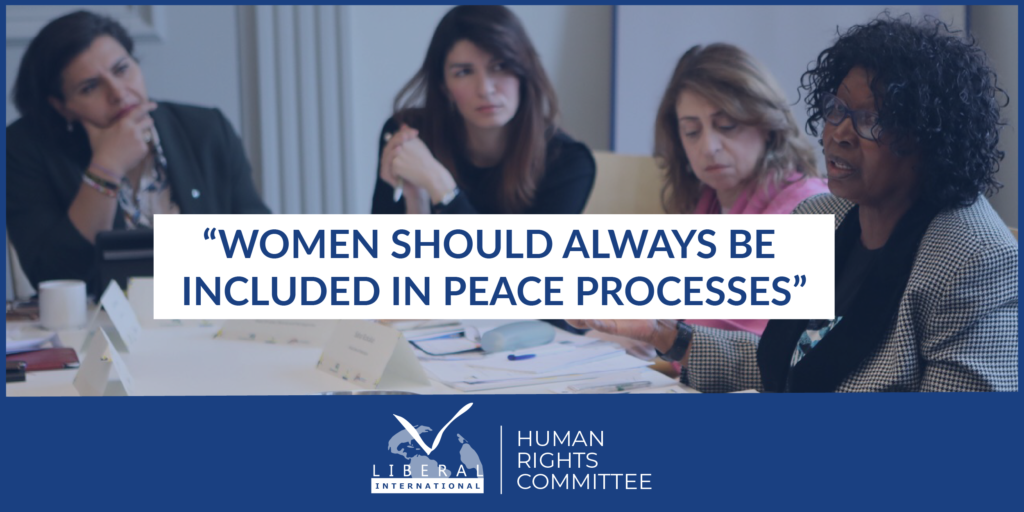
It is critical that women should always be included in peace processes from the grassroots level, where conflicts play out, to the highest bureaucratic levels, where life-changing negotiations and peace deals are brokered. Support must be given to the networks of women mediators in different geographic regions and to their global cooperation.
The world has paid enough lip service to the inclusion of women in peace initiatives. It’s time to achieve the practical realities by bringing them to the table for the sake of humankind, sustainable peace, security, and development.
[1] Council on Foreign Relations, Women’s participation in peace processes (2019): https://www.cfr.org/womens-participation-in-peace-processes/.
[2] United States Institute of Peace (20 Nov. 2017): https://www.usip.org/publications/2017/11/essential-role-women-peacebuilding