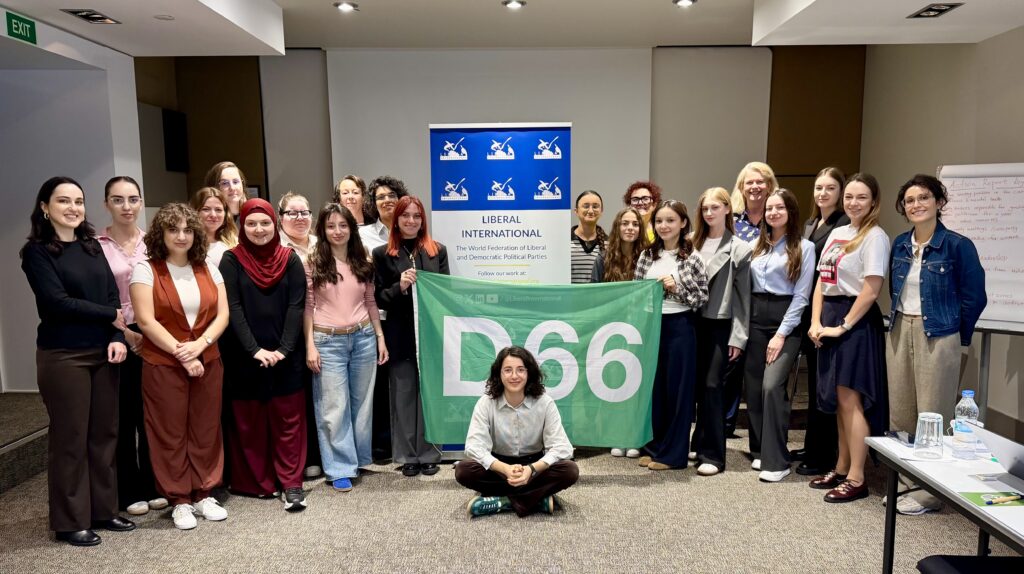
Liberal International, in collaboration with International Network of Liberal Women (INLW) and International Federation of Liberal Your (IFLRY), has prepared several country-based case reports regarding women’s rights violations for the United Nations Commission on the Status of Women (UNCSW).
All the cases reviewed in the joint contribution involve retaliation against women for public expression or activism, including arbitrary detention, denial of due process, and gender-specific harm. In all countries, legal systems were used to criminalize or silence the women involved, often in violation of their constitutional and international rights. Each case includes explicit gendered abuse — threats of sexual violence, ill-treatment, or religious harassment. Only in one case was the woman successfully released via court order, though broader accountability remains absent. In others, detention and judicial repression persist or remain unresolved.
These cases reveal a troubling global pattern of state actors targeting women for exercising their fundamental human rights, including freedom of expression, peaceful protest, and access to due process. Despite differing political systems, all three governments have weaponized legal and immigration frameworks to suppress dissent, silence criticism, and degrade the dignity of women through gender-based and often inhumane treatment. From an international human rights perspective, such actions violate binding obligations under instruments like the International Covenant on Civil and Political Rights (ICCPR), the Convention on the Elimination of All Forms of Discrimination Against Women (CEDAW), and the Convention Against Torture (CAT).
These are not isolated incidents. Each case reflects systemic practices of repressing dissenting or politically inconvenient women, often under the guise of national security or legal technicalities.
States have a duty not only to refrain from violating these rights but to actively protect individuals — particularly women human rights defenders and vulnerable detainees — from abuse and retaliation. This includes ensuring independent courts, safeguarding due process, prohibiting arbitrary detention, and addressing gender-specific harms like sexual violence, religious discrimination, and denial of reproductive care. Upholding international human rights standards is not optional.
We thank to INLW and IFLRY for their hard work and dedication to defending women’s rights. We sincerely hope that this joint contribution will gather sufficient attention to the cases reviewed.