The ongoing Russian invasion of Ukraine has raised serious questions and thoughts about the nature of modern warfare.
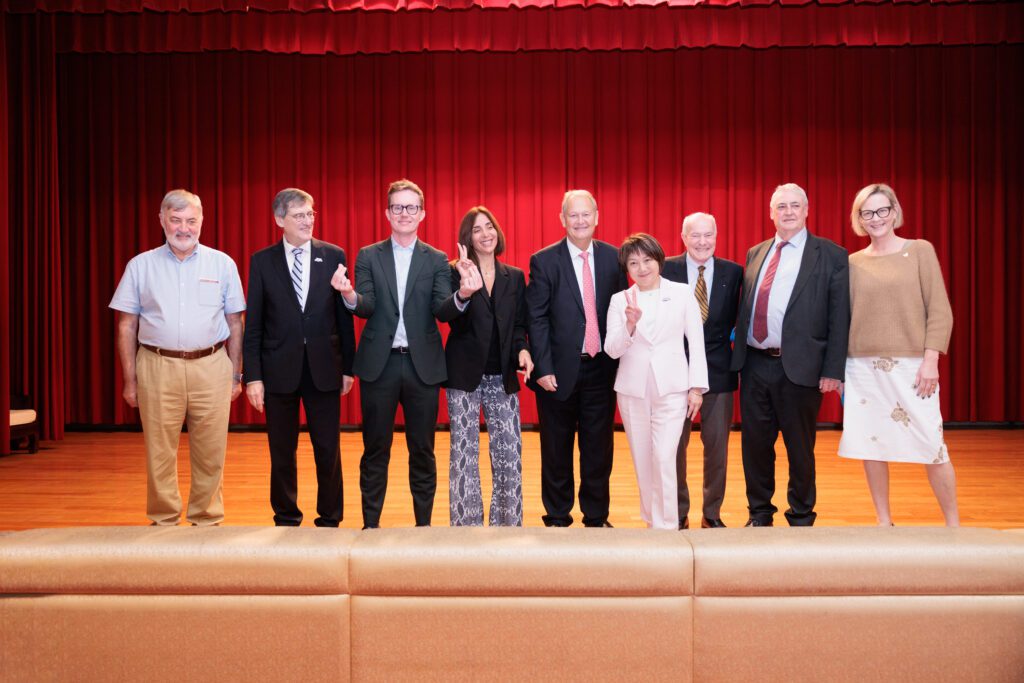
For our Isaiah Berlin Lecture 2023 at the National Liberal Club in London, UK, Sir Lawrence Freedman explored these issues in depth, engaging in a lively discussion with participants from academia, media, and political networks, facilitated by LI’s President of Honour, John Alderdice.
Sir Freedman’s lecture provided a timely and insightful intervention into the war in Ukraine, offering a comprehensive and nuanced analysis of its causes, consequences, and implications for the future of warfare. He argued that the war has exposed the limitations of conventional military power, while also highlighting its significance for the world.
In addition, Sir Freedman discussed the ethical dimensions of the war, raising concerns about the use of indiscriminate force and the targeting of civilians.
It’s a delight to be here and see so many old friends in the audience as well. I actually met Isaiah Berlin when I was at Oxford. All I can remember is he talked very fast indeed. What he said I’m sure I wish I’d remembered but I didn’t. My other sort of, whenever I hear his name I think of a moment in my career, you mentioned I was at Chatham House. I had a Russian, “Soviet”, who sort of had befriended me, and I wasn’t quite sure what to do about this because every Christmas he would invite me round for lunch at which he would give me a bottle of something, and I thought this was a bit awkward, especially as the next dinner was planned just after the Soviet invasion of Afghanistan. So, I thought I’ll have to buy him a present too, and I bought him Berlin’s book on Russian liberals, which seemed to be appropriate. Not long after that the chap from MI5 came to see me and said you do realize, I don’t remember his name, that he’s a member of the KGB. I said but he’s not very bright and he said but you’re not very important.
So that was my dealings with the world of spies. Now onto a more sombre subject which is the ongoing war between Russia and Ukraine. I’m wary about talking about lessons from the war. Wars are not set up as educational experiences, they’re all very different, and the factors of chance that come into the way that wars develop which mean that you can draw lessons without always being aware of the circumstances in which they took place. So, I think it’s useful to think about what this war is telling us about how wars are fought these days. And there are some aspects which are obvious, that hit you, that would be relevant in all wars in the future, of which the role of drones seems to me the most obvious. But also, this war isn’t over by any means, it’s got some way to go, unfortunately. So anyway what I want to say now is preliminary, we will have to wait until we’ve got a better sense of what happened, and we’ve also got to be aware that it goes through stages and what one thinks are the lessons, what one thinks stand out at particular stages, don’t necessarily stick out in the future.
Let me start by giving an example of that, which is after the Russian annexation of Crimea and the development of the conflict in the Donbas in 2014, and a lot of what was going on around that, including cyber-attacks, the various information campaigns the Russians were winning, well not winning, were running. The idea of hybrid war took place, and if you look at much of the literature on warfare from 2014 onwards this idea of hybrid war is very much to the fore. The origin of this, the origin of the term, in fact, goes back to the Israeli campaign in Lebanon in 2006, or the Hezbollah campaign against Israel more like it, when it was seen the different forms of warfare could coexist at the same time. This was not a surprise, it often happened, but what did happen with Russia and Ukraine is Garrett Gerasimov, the general who’s still in charge of the Russian Armed Forces, had given a speech in which he seemed to be talking about what we understand as hybrid war.
A good friend of mine, Mark Galeotti, decided to turn this into a doctrine, something which he bitterly regretted afterwards because he decided this wasn’t actually what had happened. But for a while everybody talked about hybrid war as, essentially the idea of hybrid war, which was being waged against us, it wasn’t very hybrid for the Ukrainians, was about undermining society, things that in the past would have been called sabotage or subversion, or propaganda, but this time facilitated through the internet, through modern media, social media, and so on. So that hybrid war became a thing, the European Union sort of adopted it, so when in Belarus, when the Belarusians were trying to bring migrants into Belarus in order to push them into Poland, this was described as hybrid warfare. The better way of talking about it, but if you read lots of books prior to the full-scale invasion, this was seen as the future of war, because it was seen as a way by which you could operate in this sort of grey area between peace and war, without risking the escalation to full-scale war. Well, people don’t talk about hybrid warfare much anymore, because the warfare that we’re seeing in Ukraine has not got many hybrid elements, it’s a pretty full-on war.
Indeed the elements that we thought that were hybrid, cyber, and information campaigns, have not been that important. Cyber, the Russians tried cyber attacks right at the start of the war, they were very intensive, probably the most intensive ever attempted, but they didn’t work because or there were remedies found, and this was because a number of companies, Microsoft, Starling one has to say, came in and rescued the situation. So though we were expecting disruption of network communications in Ukraine right at the start, they didn’t happen, indeed the Russians found themselves using Ukrainian communications because they didn’t bring their own with them, and of course, this is why they suffered some awkward losses of commanders early on, because it was easier to pinpoint where they were. Equally with the information campaigns, great activity on social media and elsewhere, but if you look at the effects, pretty marginal, the most important effects of these campaigns are in Russia. I mean they convince themselves, but they have had limited effect in convincing people in the West. They’re more effective in, I hate the term but we’ll use it for simplicity, the Global South, because these campaigns can work when they’re playing on pre-existing doubts and divisions, but they don’t create the divisions in themselves.
So the elements that we were sort of expecting to be really important, turned out not to be important, and instead, we had a war that turned out to be pretty basic in its methodology, elemental even, with the temptation to refer back to the Great War when you look at the trench warfare and the artillery barrages. In fact, the war in Ukraine from 2014 was always an artillery war. In the Donbas, it was always an artillery war, and most modern wars are artillery wars, with Isis or wherever. The part of the mythology of modern warfare is it’s all about manoeuvre and as we’ve discovered in Ukraine, manoeuvre is very difficult, but artillery, that keeps on going.
Now to frame there for the way that I find it interesting to talk about the war, I think it’s useful to look at two traditions, one that we now associate with the West and the other that we associate with Russia, they may overlap to a degree. The one we associate with the West, which is just being followed by Ukraine, is a rather classical approach to warfare. Warfare should be seen as a battle, as a contest between regular armies. It should not involve civilians. It should not be directed against civilians, but if you can win a decisive battle, by defeating your opponents, then that should settle the matter so that the key contest is between armies and navies, Air Forces.
The alternative approach, which we can associate with Russia, is what I’d call a total war approach. Now going back to the interwar years and the Second World War and onto the nuclear age, this was seen as the age of total war, because the idea that you could separate off the armed forces from the rest of society seemed to be obsolete. This was largely because of air power, it was possible to attack civilians and cities, and there all sorts of reasons developed as to why this could be a good idea. First, because the munitions factories had workers, didn’t that make them a legitimate target? Secondly, because the morale of the population seemed to be an appropriate target. Soldiers were disciplined, and knew how to take fire, but how could you expect civilians to take fire in the same way? So leading up to the Second World War, you have an assumption of panic and emotion shaping the way that a war develops, because of attacks on civilians. Look at the way, look at H.G Wells’ books or something like that.
Now after the Second World War, total war was raised to the next level with nuclear weapons, but of course that had the effect of making the Great Power War look foolish and far too dangerous, so we have what is erroneously called The Long Peace. Erroneous because there’s been plenty of wars during this period, but not erroneous when you look at the Great Power War. There hasn’t been World War III, which is what people were expecting almost from the end of World War II. We haven’t had the next in the series. So nuclear weapons seemed to play a role in dampening down the urges to war, making the major powers cautious and circumspect. And this is still working, the reason why we’re not fighting side by side with the Ukrainians and while the Americans are still being very cautious in what some of the things they hand over, is because we don’t want a nuclear war. Equally, the reason why Russia has attacked its neighbours who are not members of NATO but not those who are members of NATO is because they don’t want a nuclear war either. So nuclear war still plays an important role in this context, containing it in some ways, although they’re not being used. And I think that’s why they haven’t been used because I think nuclear weapons serve Putin’s purposes quite well at the moment, because once he does use them then all bets are off, and it’s not clear what actually he could gain within this particular conflict by using them, because there’s plenty of means of escalation as he’s demonstrated already.
So the urge to total war seemed to be limited by the fact that it went to an extreme, that it just went too far. It was one thing to have the Blitz and Hamburg and Dresden and Tokyo and so on, but after that, it was too far, too much. Math has been an influential factor in international affairs ever since. Furthermore, when those who were looking back at the Second World War considered the impact of the great Air Raids of the period, they cast out on whether they had any strategic value at all, because even if you batter the populations, if they, turn out as it did, that they can absorb the pain, that they can cope, that they become resilient, and if even if they feel miserable and demoralized if they can’t do very much about it because the political means of changing their government’s policy aren’t there for them, which is certainly the case in Nazi Germany, then in fact what you’ve done is kill a lot of people, and destroy a lot of buildings, without having achieved very much. Now there was a qualification to this, which is you can attack military-related infrastructure, energy systems, transport systems, and so on, and if you have great accuracy then you can do that as the Americans did for example in the Desert Storm and say this is still about affecting the battlefield. But there’s a line there, and the Russians have shown in the wars that they fought, and to Putin in Chechnya and Syria, they’re not very careful with civilian life. The progeny in Chechnya was bombed to Smithereens some time ago. So that has been the two distinct ways of fighting.
Obviously, the Ukrainians have got no interest in fighting on their territory in that way and until recently they didn’t really seem to have very many means of challenging Russian territory. What’s interesting, in recent months, is the increasing use of drones in particular, but also missiles now, to attack targets either within Russia or within occupied Crimea and particularly recently Sevastopol where the naval ships have been attacked. I’ll come back to that in a moment. So, because Ukraine is seeking to liberate its territory and its territory has been battered enough already, it wishes to see, to stay with the Western model, and of course that’s the model with which we’re comfortable because it’s force on force, it’s encouraging armies to win battles and, in the hope, as you liberate territory, that’s going to make the difference. But it’s difficult, and this is where people are, I think at this stage of the war, realizing some things about contemporary warfare that are worth keeping in mind.
Now the first thing to note and why it’s difficult to draw too many lessons from this, is the limited air power available to Ukraine. Now without it, they’ve done pretty well dealing with Russian air power, but an American campaign, a NATO campaign, in these circumstances would be dominated in the first instance by airpower, it’s not in this case. Secondly, in these circumstances what one sees is the strength of defence. This has been true right from the start, not only in the defence that the Ukrainians were able to mount on the first days of the war. By and large, only where defences are thin or weak, has territory been taken. This was true of where the Russians made progress in the first days of the war, in the South, it’s in the East, where the Ukrainians made progress a year ago in Kharkiv, where they had a successful offensive and liberated quite a bit of territory. But if you look at all the Russian offensives, which since the early days of the war have achieved very little, by and large, ruined cities, and more recently Bakhmut, which they may lose again.
These are hard grinding, gruelling, attritional battles, which they fought in the way which their Soviet predecessors would have fought, using infantry in a sense to help locate the enemy. So there’s a concept of dispensable infantry, which is pretty grim for that to you, to be followed by artillery barrages. It’s not a very clever approach, and the West has recoiled from that because in the way that the West has talked about the war over the last 20 years or so, well longer than that, we stress manoeuvre, that’s how we do it. Not attritional methods, which is just trading far apart, we wish to do it by manoeuvre. And that’s why there was a degree of interest and excitement earlier in the year as Ukraine started to be given the means of manoeuvre with tanks, infantry, fighting vehicles, and so on. Well, what it turns out is manoeuvre is difficult, which is not a surprise. Against minefields, tanks can soon run into trouble. When you have a totally transparent battlefield as we almost are having now, the enemy can see you coming, and when they can see you coming, if they’ve got any systems of any accuracy, they can take you out.
Now the Russians have suffered from this probably more than the Ukrainians, but it’s a feature of the war and it has shaped tactics so that all the tanks and infantry fighting vehicles, or some of them, were lost in the first days of this counter-offensive. A lot of them are still there ready to go, because it hasn’t been sensible yet to put them into battle. The Ukrainians are making progress through dismounted infantry, so that’s mail-making progress, but it’s difficult and slow, and therefore the hopeful battlefield victory is some distance away. It’s not that progress can’t be made, it’s not that territory can’t be liberated, but it’s slow. By this means that these things can change very quickly as they did with Kharkiv last year, because an army that suddenly realizes that it’s about to be breached can break very quickly, which is what happened, but until that point, it’s very difficult.
So what that of the total war side of things, in a year ago, just over a year, just under a year ago, when after the Kharkiv offensive, which was the moment when a sensible strategic actor would have decided to cut their losses, Putin doubled down. He did a number of things, he went to full mobilization so they could plug in the gaps with more troops, and he went to, he upped his political objectives. Normally in these circumstances, the sensible thing to do is to scale down your objectives, as he had done in March after the failure to take Kiev. It seemed to suggest he was only interested in Donbas then, but because now he was under pressure from the ultra-nationalists, who were very cross with him for losing the best chance they had to take Ukraine, he moved to the fake referendums and annexation of the four provinces Luhansk, Donetsk, Kherson and Zaporizhzhia, in addition to Crimea, which he had already taken, to become part of the Russian Federation, and every time somebody says let’s have a diplomatic solution, this now is in the way. They’ve got to change their constitution to have a peace settlement now, because and every time you will see when they talk about diplomacy Ukrainians rush, and the West is asked to accept the new realities, which obviously they can’t do and won’t do.
And then the other thing he did was to appoint General Surovikin to be the overall commander, and Surovikin’s strategy, which he laid out very clearly, initially was to shore up Ukrainian, the Russian defensive lines, using the new recruits, and to mount a campaign against Ukrainians critical infrastructure using drones and missiles and so on. His background is Aerospace so that’s what they began to do, and this was the most efficiently organized part of the whole Russian war effort. It went on for months and the Ukrainians coped, but it wasn’t always easy, last December it got very close to just losing the electricity group, but they kept it going with a lot of help. It wouldn’t surprise me if this starts again, but they have resilience now that they didn’t before, they know what to do.
But that wasn’t just an add-on to the Russian strategy it was a critical part. Now Surovikin is not only demoted, he’s in disgrace because he and Prigozjin were allies. He remained in contact with the Wagner group so after the mutiny in which he gave what looked like a hostage video, pleading with Prigozjin to stop. He wasn’t seen for a while now, latest he’s been seen in civvies, actually he’s been seen in Algeria, so goodness knows what he’s doing there. But anyway, he, the most capable general, is out of it and it’s worth noting something else about fighting with these sorts of regimes is that when you look at the top, the top people are chosen for their loyalty as much as their competence. Shoigu and Gerasimov, who’ve been there forever with Putin, are failures. Whatever happens, this is a calamitous way to fight a war, but they’re loyal and they won’t cause him trouble, whereas you could imagine if someone like Surovikin appeared as the great war hero and won the war, he would be seen as a threat to Putin.
So the total war aspects have become very important, but they haven’t worked, again, and other aspects of total war, aspects like the treatment of Ukrainians in occupied areas, have just made the Ukraine again, another argument against negotiation is why do we hand over territory to people who commit atrocities on that territory. So all of that has created unity in Ukraine, despite just how difficult the situation is, which they don’t really have a choice, whatever they do, whatever we do, they’ll keep going.
A couple of final points on the politics of the war, because the politics of war is as important as what’s going on with the weaponry. The first day of the war I think decided much of what happened afterward, and it could have gone differently, it really is important to note that the Ukrainian defence of the Hostomel airport just outside Kyiv was not a simple matter and was not foreordained. They were, got good intelligence, they had units that weren’t, were almost spontaneously mobilizing themselves to get there to deal with the threat. I know it was a very brave operation but as soon as Russian paratroopers couldn’t land in that airport, much of the immediate threat to Kyiv was eased, but also Zelensky stayed.
The importance of Zelensky’s first not being killed or captured, which was a key part of the Russian plan, they relied too much on their on FSB to have sorted out Ukrainian resistance before the troops arrived and in that, they failed. The fact that Zelensky was not caught or killed, the fact that he could go on television and still talk to his people, the fact that he said he was staying, and in that other part of that famous message “I don’t need a ride I need ammunition” he established what he needed and what he wanted from us and from others and that led I think to the final point. What Ukraine is doing is remarkable, but they’re doing it with a lot of support, and it couldn’t just, they would fight.
Many of us, when we were looking at the prospective war before it started, assumed Putin was crazy to start a war like this, not because we thought they would have trouble in battle, but because you can’t occupy a country of that size, of that population, with a record of ready to take on invaders and oppressors. So they would have fought under any circumstance, we didn’t necessarily expect the war to go, take the form it has taken. But it’s the fact that it has taken this form has meant that external support has been absolutely crucial, and what we’ve seen as a result is that the loss of Russian forces has turned them into much more of a sort of 20th-century army, fighting in 20th-century ways, while Ukraine is slowly turning into the 21st-century army, with more modern equipment, all of it is still late 20th-century equipment but it’s more modern than quite a lot of the stuff the Russians are using.
So how does it end? I don’t know, because it’s not evenly balanced, there are lots of different things going on, but it’s difficult, and I, my view is it’s wise to assume quick victories, knockout blows, I don’t think that even if the Ukrainians take more territory, and I think they probably will over the coming weeks, we have to get ourselves in a mentality that this will go on. Why is that a sensible Russian leader would have cut their losses, a sensible Russian leader would be proposing a ceasefire now, because then they would have some territory to show for it. If they could do it they’d certainly put Zelensky in a difficult position, but that’s not what Putin wants, he wants more Ukrainian territory and he’s waiting for the next American election. He’s made that very clear in all of his stranger speeches, but he talked about political instability in the U.S. how Trump is being persecuted, and so on. His hope is that by the end of next year, the U.S. will have a new administration, and maybe it will, that’s not under our control, but in the meantime, I think we have to keep, we have to be aware that it’s not actually that difficult for Europe and North America to keep Ukraine going. It’s a challenge for Ukraine with manpower and so on but in terms of our budget it’s perfectly doable and it’s important that we do.
The other thing that Ukraine can do is, which is why I think the attacks on Sevastopol last week, which if you’ve noticed were missiles, possibly UK Storm Shadows, knocking out ships including a submarine, in this really important port, is this really important port was at the heart of this of the whole issue in 2014. There are a number of reasons why Putin wanted Crimea, I mean most Russians never felt Ukraine should have had it in the first place, it was a whim of Khrushchev in 1954 that it got handed over when he was trying to cultivate the Ukrainian Communist Party, it fitted in with their narrative about Russian language speakers being unhappy with the change of government in Kyiv, but as a Sevastopol this base on the edge of the of the peninsula, which was actually covered by a separate treaty but never minds, that was one of the reasons why they wanted to annex Crimea, to keep Crimea safe for Russia. And here it is showing it’s not safe for Russia, that it’s vulnerable. I think things like this undermine and eat away at Russian confidence about where the war is going, but I don’t know how this ends, because it depends on decisions being made in the Kremlin, we have to wait and see what happens.